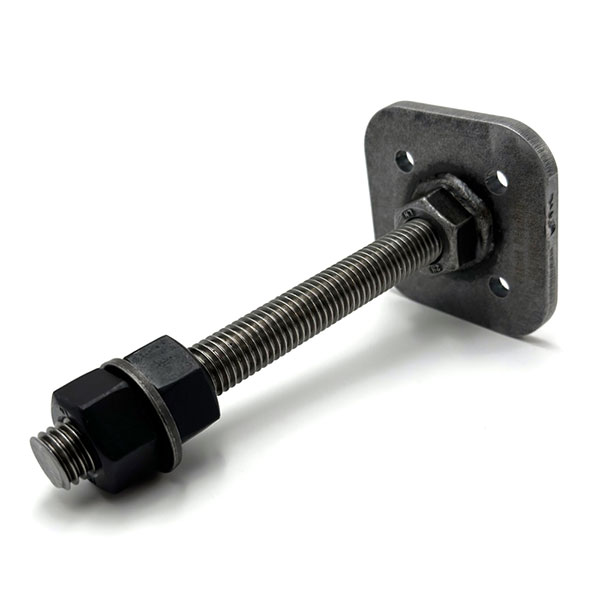
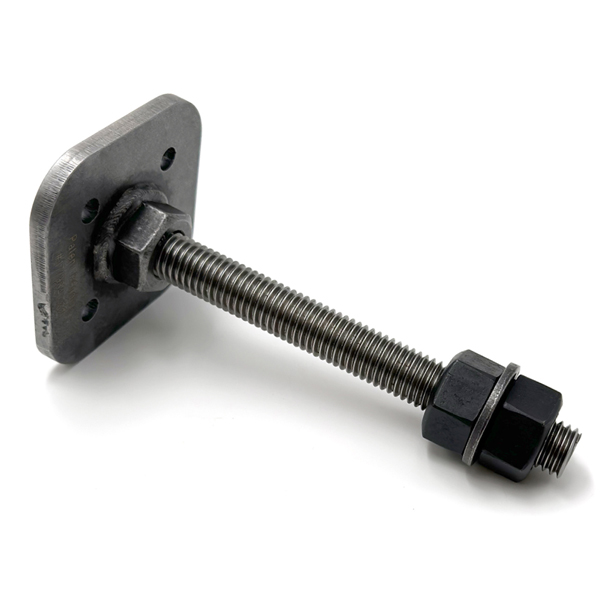
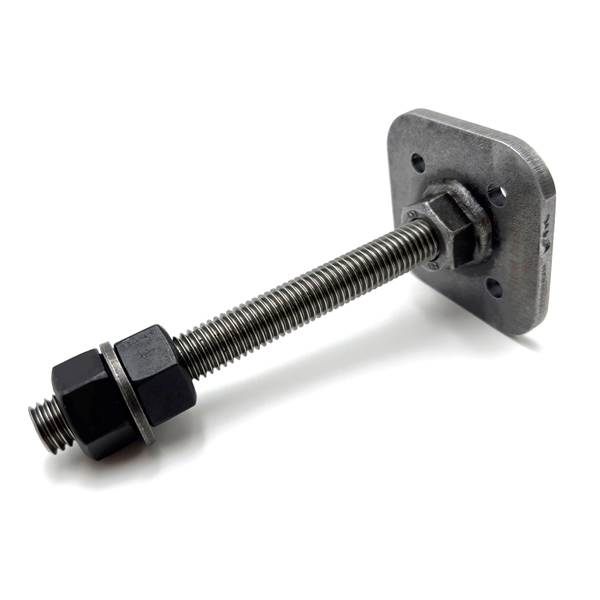
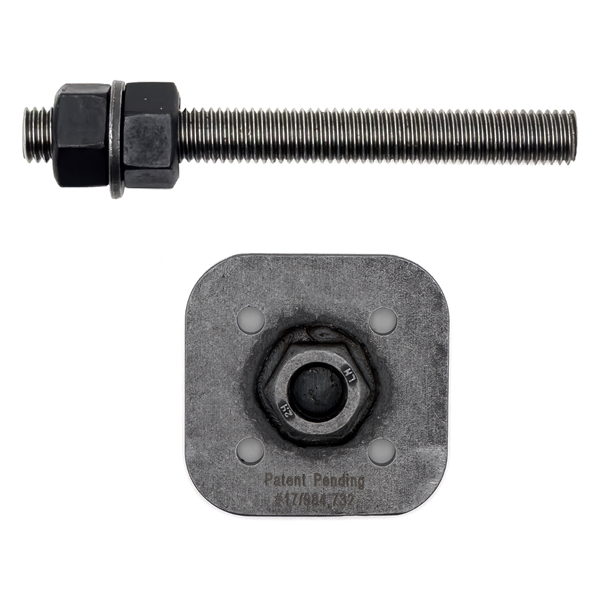
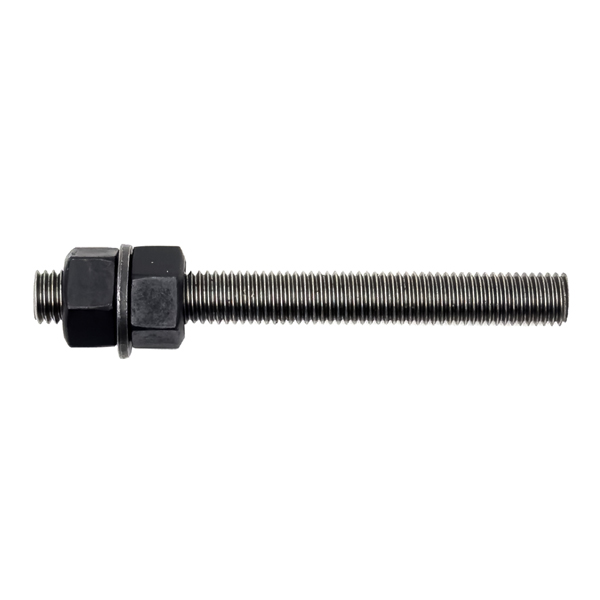
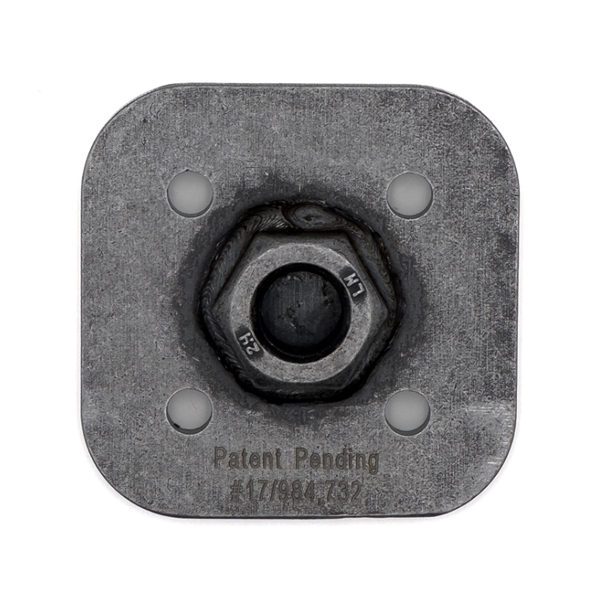
Standard Center Plate Concrete Anchor Bolts
Price range: $445.00 through $8,900.00
Replaces Tie Down Straps in Wood Structures.
Replacing tie-down straps and strap anchors
Tension tie straps and strap anchors carry uplift and shear between wood framing and the foundation. They are thin, largely embedded, and they corrode from the concrete side where no inspection can reach them. A strap that looks sound at the surface can have lost most of its section below the sill plate.
Standard Center Plate Concrete Anchor Bolts replace that connection with a plate-bearing anchor installed into the existing concrete. The wide plate spreads load across a larger bearing area than a strap edge or a wedge anchor cone, which is what makes it suitable for older, cracked, or marginal-quality stem walls.
Where the plate design matters most
- Cracked or shifting stem walls — bearing area is spread rather than concentrated at one point.
- Retaining walls under soil or slope pressure — sustained lateral load rather than occasional peak load.
- Foundations where earlier anchors already failed — corroded straps or tie-downs that have broken out the surrounding concrete.
- Shear-prone connections — sill plates that need to resist sliding as well as uplift.
Material and code position
The anchor uses ASTM A193 Grade B7 chromium-molybdenum rod, the same alloy family specified for high pressure and temperature service in oil, gas and energy work, selected here for corrosion resistance in soil contact. The system exceeds ACI and ICRI criteria. As a structural repair, expect your jurisdiction to ask for an engineer’s letter; requirements vary by city, and some do not require a permit at all.
Ordering
Orders ship from Tempe, Arizona, typically arriving in five to eight business days. If the connection you are repairing is a J-bolt rather than a strap, the Standard Knife Anchor Bolt is the correct part. For a temporary vertical support during the repair itself, see the Standard Dead Shoring Bolt.
Frequently Asked Questions
It replaces tension tie straps and strap anchors in wood structures, taking over the uplift and shear connection between the framing and the foundation.
The wide plate spreads load across a larger bearing area than a strap edge or a wedge anchor cone. That is what makes it suitable for older, cracked or marginal-quality stem walls where a point load would not hold.
Straps are thin and largely embedded, and they corrode from the concrete side where no inspection can reach. A strap that looks sound at the surface can have lost most of its section below the sill plate.
Yes. Retaining walls under soil or slope pressure carry sustained lateral load rather than occasional peak load, and the plate bearing area suits that condition.
The system exceeds ACI and ICRI criteria and is used nationwide. Because this is a repair to a structural connection, many Arizona jurisdictions ask for a letter from the engineer of record before sign-off, while some require no permit at all. Confirm with your local building department before scheduling the work.
Yes. Grade B7 rod is a heat-treated chromium-molybdenum low-alloy steel with a minimum tensile strength requirement of 125 ksi (860 MPa), yield 105 ksi (720 MPa), and maximum hardness of 35 HRC. The alloy is specified for corrosion resistance as much as for strength.
Orders ship direct from Tempe, Arizona. Average delivery is between five and eight business days.
Our clients report pricing installed bolts at two times material cost or more. It is worth factoring that into a bid before ordering quantity.